Castles, Chocolate and a Bear Who Knew Nothing About Beer
Stop 7 – Neuschwanstein and Rothenburg ob der Tauber
“High on a hill there’s a not remotely lonely castle…
Lay ee odl lay ee odl lay hee hoo.
Loud was the voice of the hordes of tourists,
Layee odl layee odl oo.
All good things must come to an end, and so, with heavy hearts and full stomachs, we dragged ourselves away from Alpenrose for the next part of our adventure.
First stop: Hohenschwangau and Neuschwanstein castles.
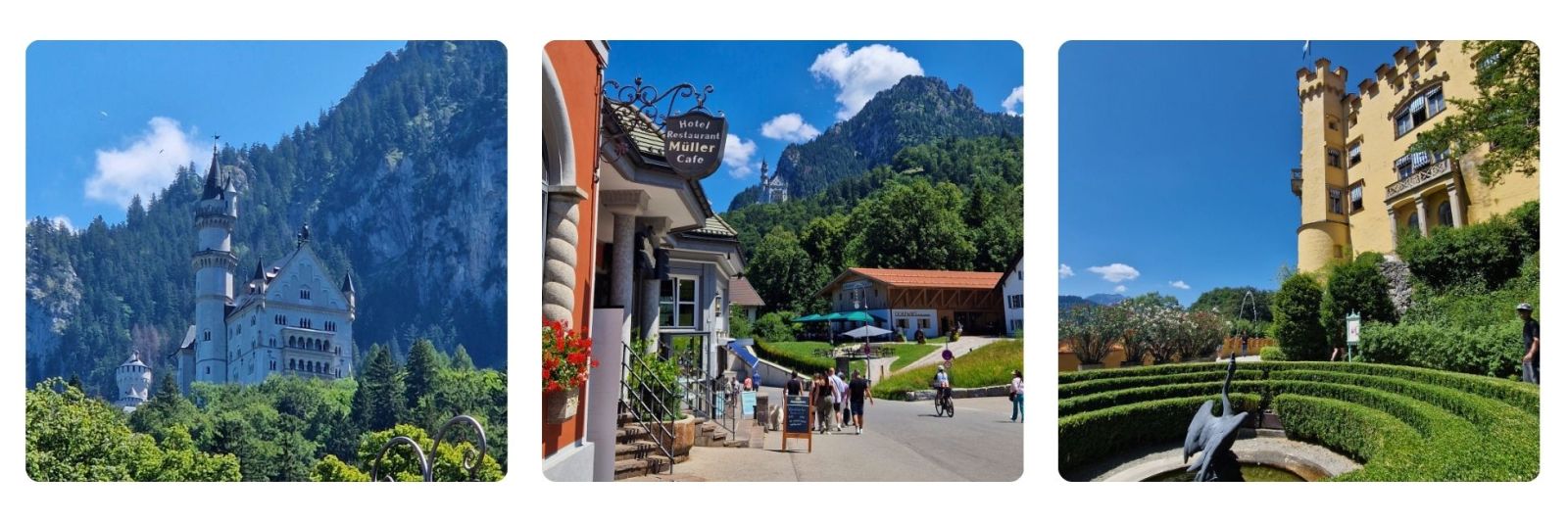
As we wound our way towards them, I couldn’t help humming a rewritten version of a certain Sound of Music classic. Something about a castle high on a hill which was anything but lonely, given that it was absolutely heaving with tourists.
We’ve been here before and, last time, apart from a few busloads of Asian tourists, we had the place practically to ourselves. We rocked up, parked outside Hohenschwangau, booked ourselves onto the first tour and off we went.
Unfortunately, the area is now teeming with visitors, presumably because everyone is on the hunt for more Instagrammable footage. And what could be more Instagrammable than the castle high on a hill that helped inspire Disney? We seem to be encountering something of a theme here.
We didn’t go inside this time. Firstly, we’ve already done both tours. Secondly, timed-entry tickets now need to be booked in advance. Thirdly, we didn’t think S would be all that interested in the antics of Ludwig II.
We did have a good look around, took some photos and bought a Minecraft ice cream.
Apparently, the stopover was worth it for the ice cream alone.
Despite looking every inch the ancient fairy-tale fortress, Neuschwanstein is a Victorian-era creation. Construction began in 1869, Ludwig II spent only around 170 days there before his death, and the castle was never finished. Only a fraction of the rooms originally planned were ever completed.
Next Stop: Rothenburg ob der Tauber
Our final destination of the day was Rothenburg ob der Tauber, just off Germany’s Romantic Road. It’s a beautifully preserved medieval town, complete with cobbled streets, colourful buildings and remarkably complete defensive walls, much of which you can walk. It is also perched on yet another hill.
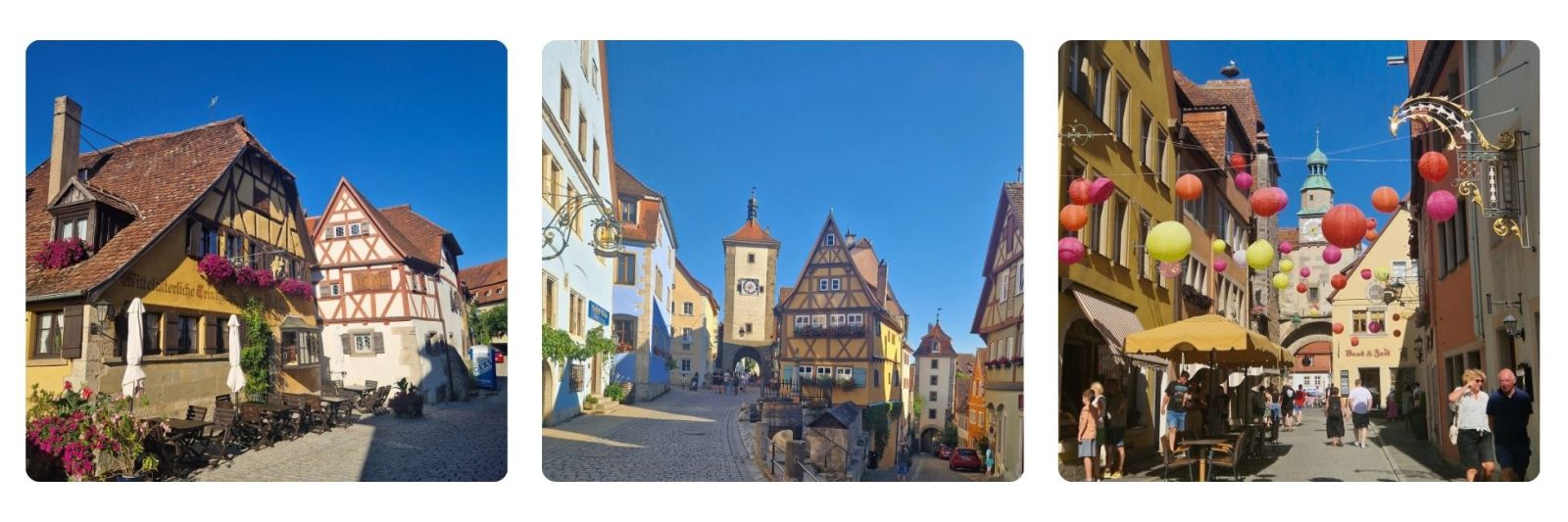
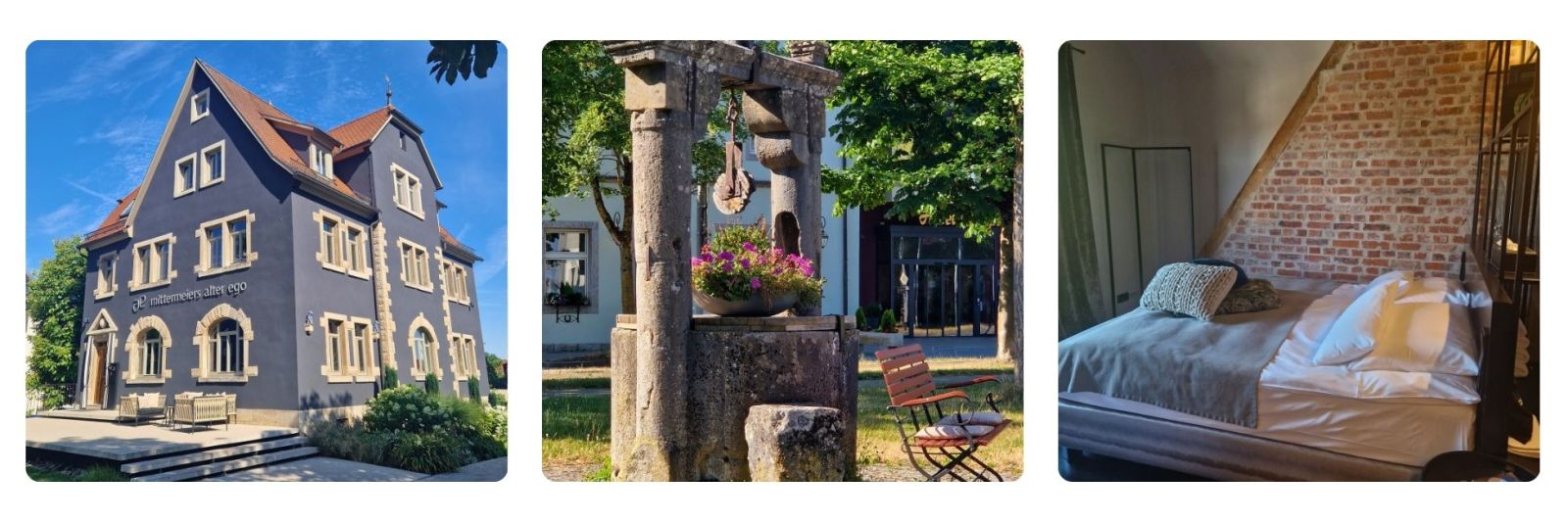
We came here last time too. If you’ve read our previous blog, you’ll know that we had a bit of trouble driving to the hotel. This time, we were much cleverer and booked a little hotel just outside the walls with ample parking.
Clever us.
And what a good choice it was, with a cute kitchen and honesty bar downstairs, plus an air-conditioned room overlooking the town.
A successful day all round.
Stop 8: Heidelberg and Kloster Hornbach
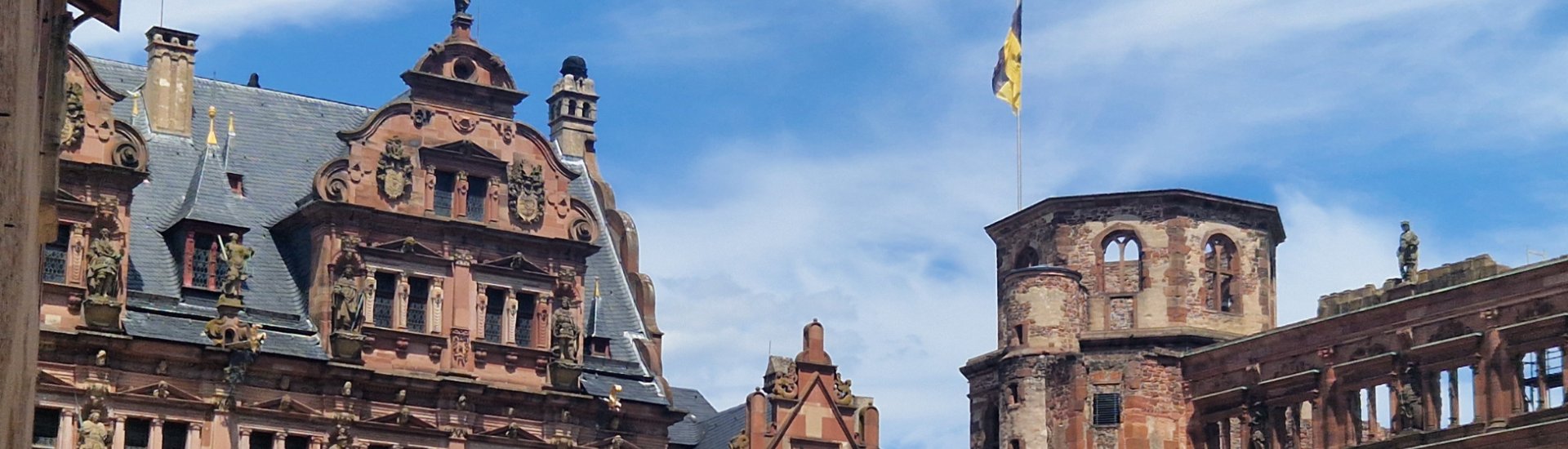
Another day, another castle. Heidelberg Castle, to be precise.
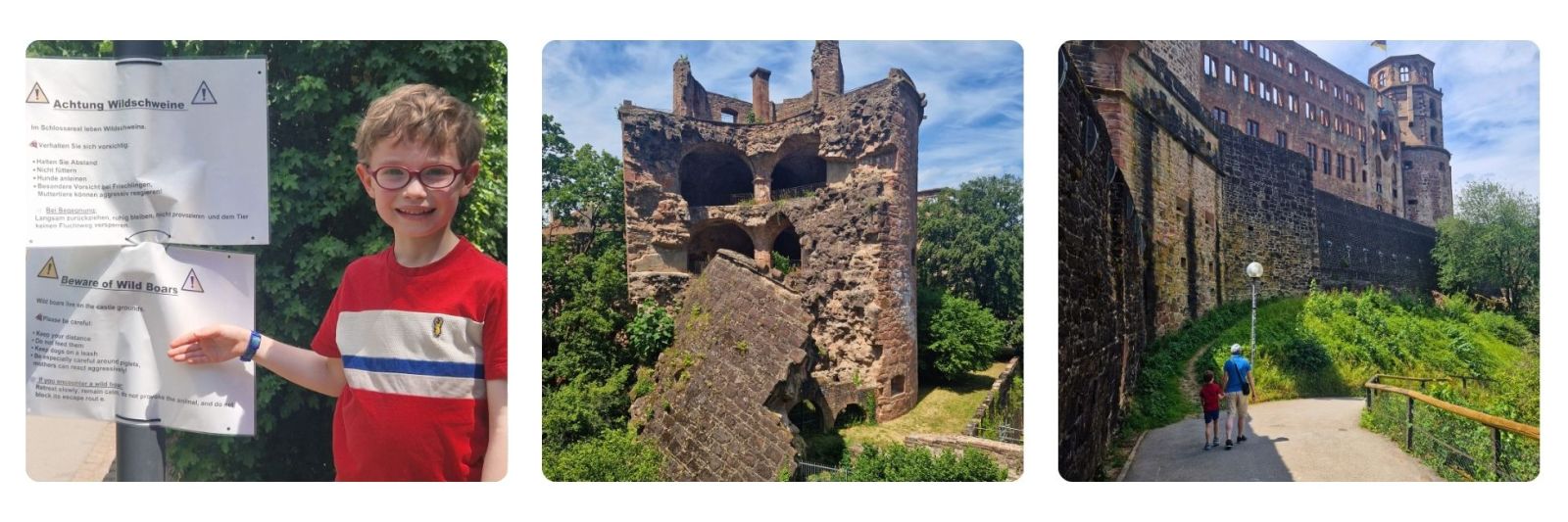
We were sneaky this time. We found the secret back entrance, with no pesky tourists and, luckily, no pesky wild boars either.
We managed to walk up and down in complete serenity. To be fair, Heidelberg Castle was far less crowded than Neuschwanstein anyway, but there were still plenty of people traipsing through the main gateway while we enjoyed some currywurst in a shaded garden just outside the walls.
We also managed to sneak back into the castle for more photos and to use the facilities, since there was nobody checking tickets at the back entrance!
It’s well worth a visit, whether you enter through the official tourist entrance or not. The castle is home to the Heidelberg Tun, one of the largest wine barrels in the world, capable of holding around 220,000 litres. The castle itself has been battered by war, fire and lightning over the centuries, leaving behind a rather impressive ruin.
.jpg)
No European road trip is complete without a stay in a monastery, and this one was no exception.
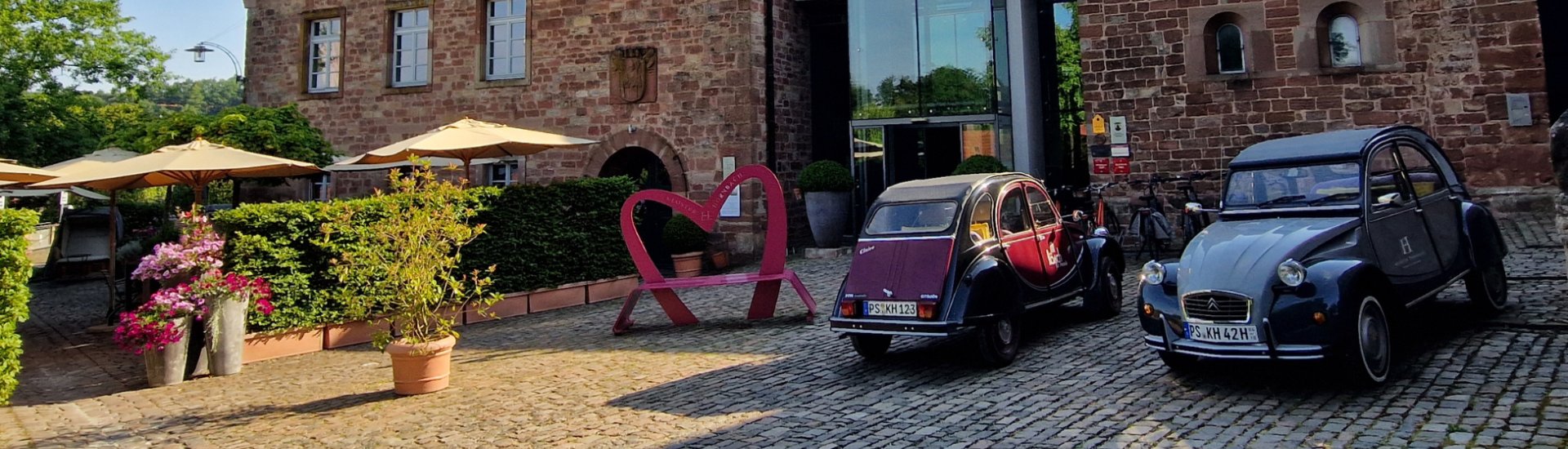
Next stop: Kloster Hornbach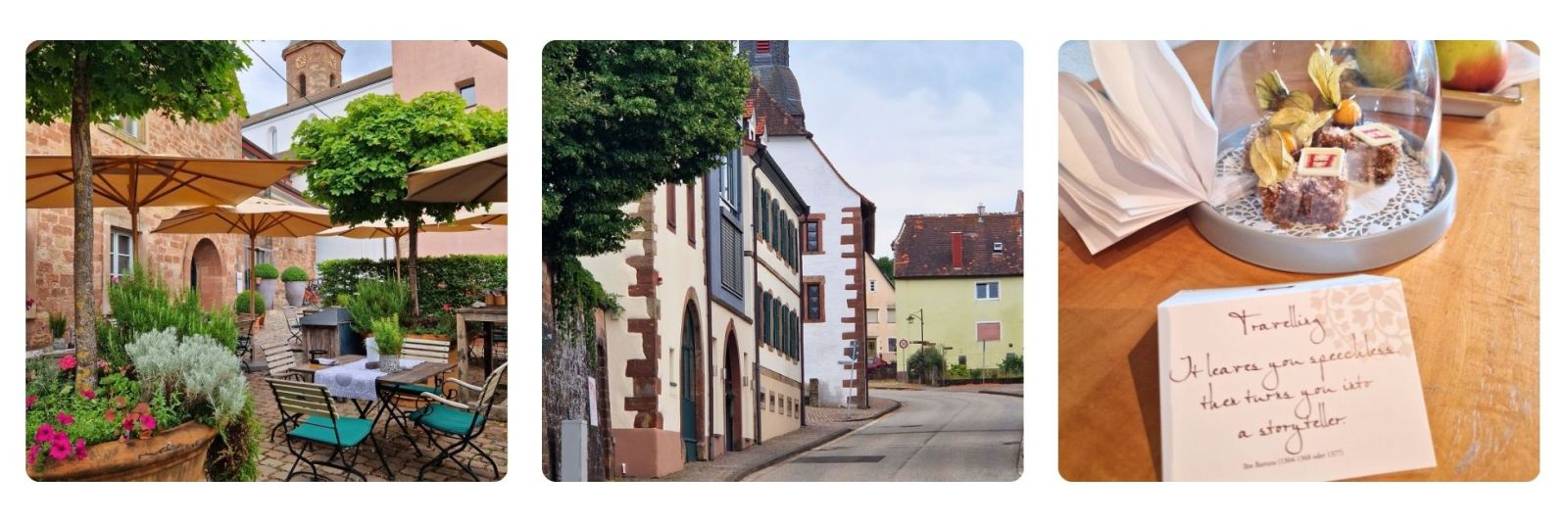 Hornbach is a sleepy German village close to the French border. Luckily for us, the monks have long since departed and the monastery has been turned into a rather beautiful and very quirky hotel, with individually designed suites.
We had the Blue Sky Suite, which has a mezzanine level. This was handy with S, as it meant he had his own room downstairs. It also had a window in the ceiling so we could see the stars at night.
Very romantic.
We were also hopeful of getting a full night’s sleep because the bells only ring every half-hour here (unlike last time when it was every 15 minutes) and, as far as we could tell, we couldn’t hear them from our suite :-)
The hotel has a couple of excellent restaurants and more freebies than I’ve encountered almost anywhere else: cold drinks, a tea station, cake, fruit, an ice cream freezer packed with all of S’s favourites, and some of ours too, plus a free minibar in the room.
There were even little turndown presents, including a bookmark and a small sun charm.
It was very hot, but that was okay because we had fans.
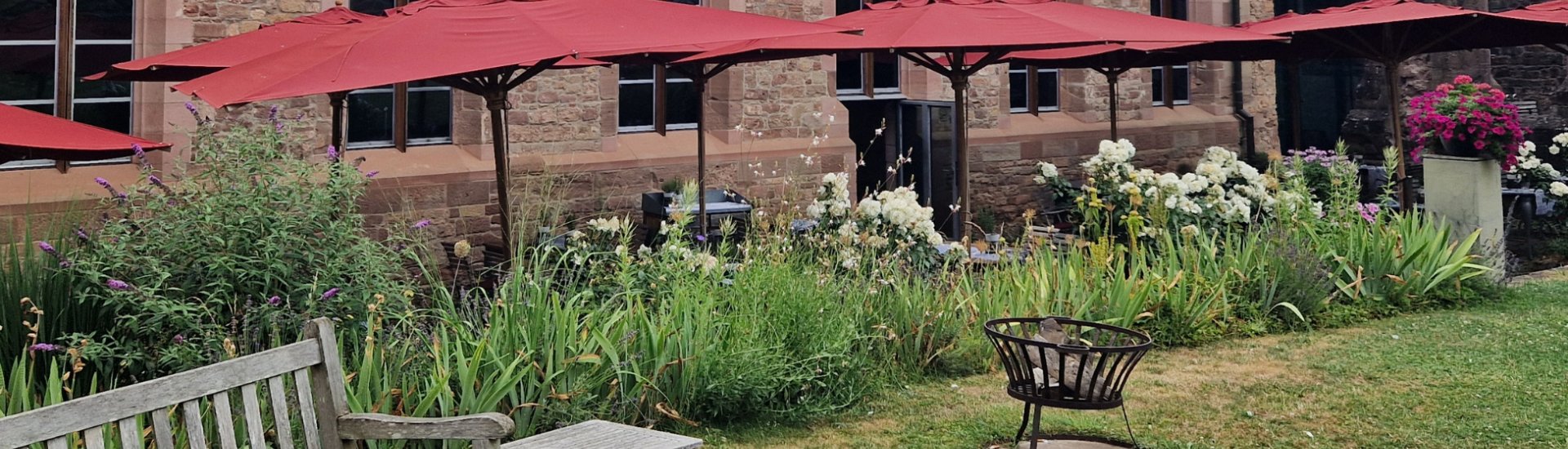
It was a shame we weren’t staying longer. I think I could have had a lot of fun lolling around the garden, drinking tea, eating ice cream and listening to the bells every half-hour.
Stop 9: Bruges
Bruges, also known as the Land of Gluttony, was our final stop on this little road trip.
It is known mainly for beer, chocolate, waffles and ice cream, so naturally we felt obliged to investigate all four.
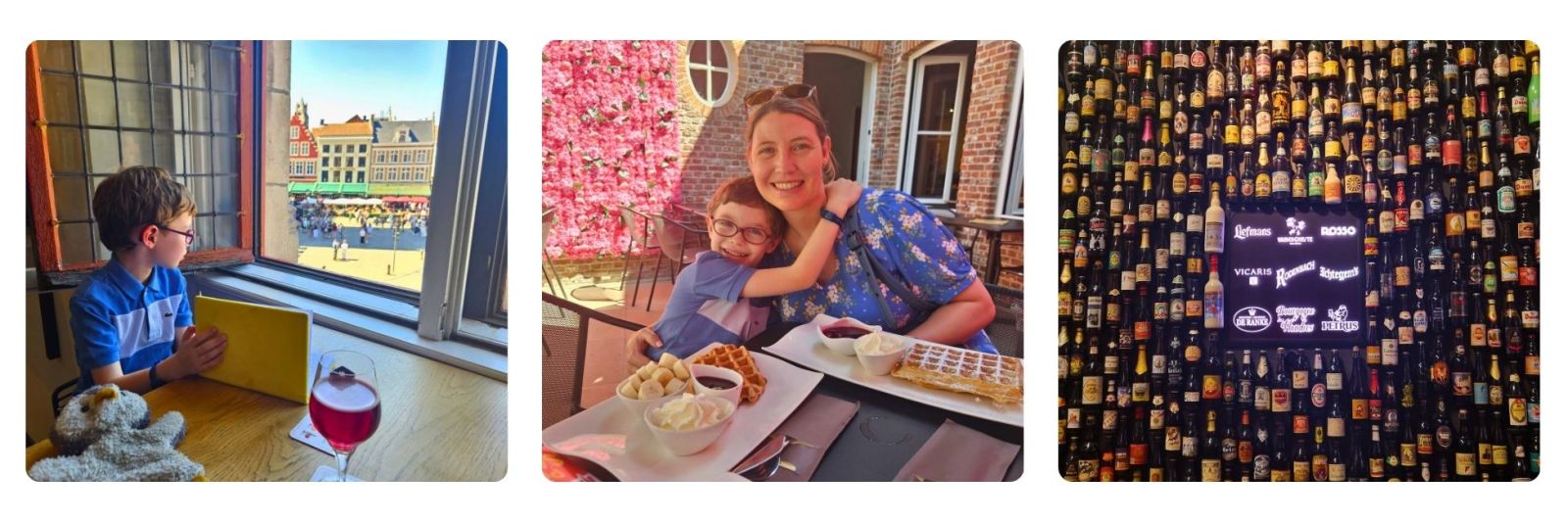
For the uninitiated, the entire historic centre of Bruges is a UNESCO World Heritage Site. The city is often called the Venice of the North because of the network of canals winding through its medieval streets, although it is considerably less likely to sink, which is reassuring.
Last time, we stayed at the Dukes’ Palace. Although it was a beautiful hotel, the parking was a nightmare. A quick search on Tripadvisor confirmed that we weren’t alone, with one of the most common complaints being that it is almost impossible to find the car park.
Once again, we chose convenience and booked a standard hotel, which has a huge underground car park next door.
It exceeded expectations. Well, other than the hairy tap and the vomit-stained carpet, but these were mere blemishes on an otherwise perfectly adequate hotel.
It was far more central than we had imagined, on a leafy street just off the main tourist drag and on what is known as Bruges’ Chocolate Line.
This was excellent news because Bruges is said to have around 87 chocolate shops, and we may otherwise have struggled to find one.
Phew.
We arrived in the late afternoon after what can only be described as a trying drive. Having spent two weeks on French toll roads and travelling through Germany and Austria, arriving in Belgium was a rude awakening and a stark reminder that we were nearing the end of our trip and getting closer to home.
It wasn’t only the driving that was a letdown. The service stations were terrible and Luxembourg, well, Luxembourg didn’t appear to have any…
Anyway, a walk around the old town followed by dinner, beer and ice cream soon perked us up, ready for a full day of touristing the following morning.
For most of the trip, I think we had been fairly ‘cool’ tourists, hanging out in little local haunts and sleepy villages. We were therefore due a full day of unashamed touristing. We were in good company too, as Bruges receives around eight million visitors a year.
First up: breakfast in a trendy brunch place.
We had been offered the standard buffet at the hotel, but as they wanted around €145 for the privilege of serving ourselves, we politely declined.
We headed out early to beat the crowds and the heat, then ambled along the canal in time for the first boat tour of the day.
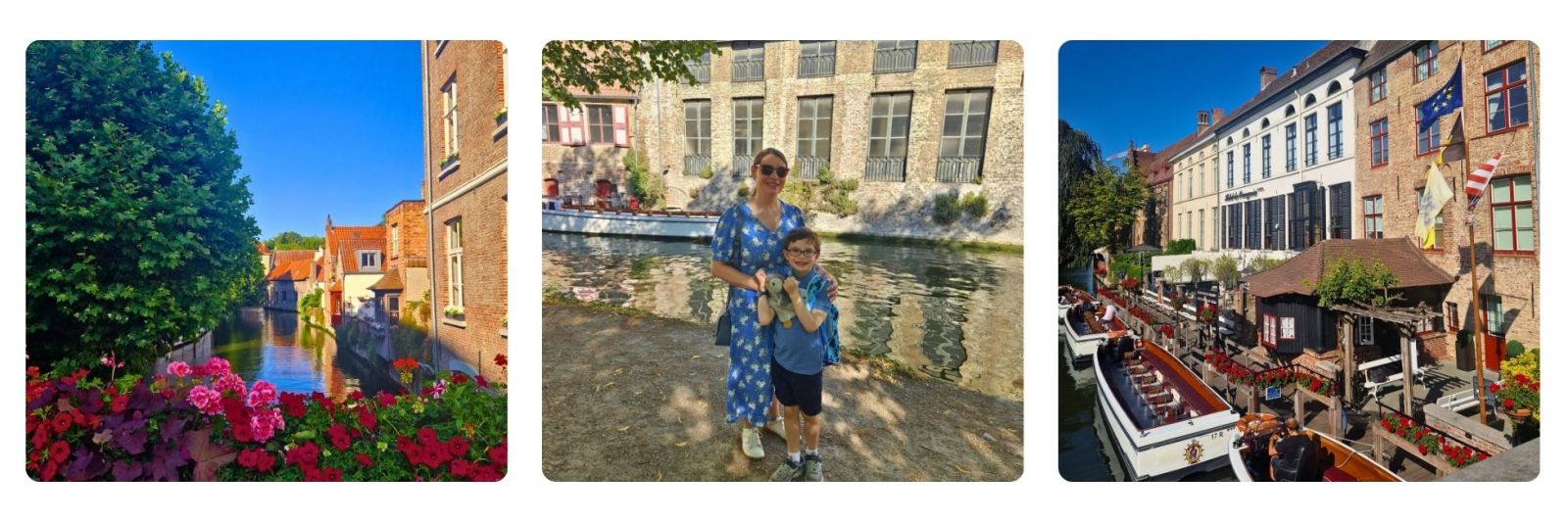
Going on one of these boat tours has been something of a lifelong ambition of mine.
When I was around 12 years old, I went on a music tour to Belgium. Just before our designated boat trip, we were given a little free time to explore.
My 12-year-old self thought it would be a good idea to wander away from the main square. After all, it was next to a large church, so how could we possibly get lost? All we needed to do was follow the spire.
Unfortunately, what my 12-year-old self hadn’t appreciated was that Bruges has 21 churches, and even more if you count the chapels. Navigating by church steeples was therefore not the most efficient method.
Oops.
Needless to say, we missed the boat tour. We did make it back in time for the chocolate tasting and demonstration, though, so not all was lost.
This time, armed with an actual map, we, by which I mean Dave and a mobile phone, we managed to find the starting point and off we went.
The tour was informative and thoroughly enjoyable. Our guide also shared several interesting stories, including one about the red bricks once being painted with ox blood. We were also told that some buildings had tiny windows at the top for carrier pigeons used to send messages during the war.
Pmail, the precursor to email!
Next on my tourist to-do list was coffee in the main square. It also happened to be market day.
What fun.
Good job I’d taken all my photos the day before, though.
We then visited the Bruges Beer Experience, a museum dedicated to, well, beer.
We booked the adult audio guide for ourselves and the children's one for S, but it soon became apparent that we should have chosen the children’s version because S insisted on listening to every single track on his audio guide and by the end we were waiting for him to finish, having long got bored with our audio guide.
We were genuinely confused. Was beer that interesting to an eight-year-old? There were some interactive exhibits, but still…
He later explained that his tour had nothing to do with the history or production of beer. It was a story about a bear in a circus...
That made more sense.
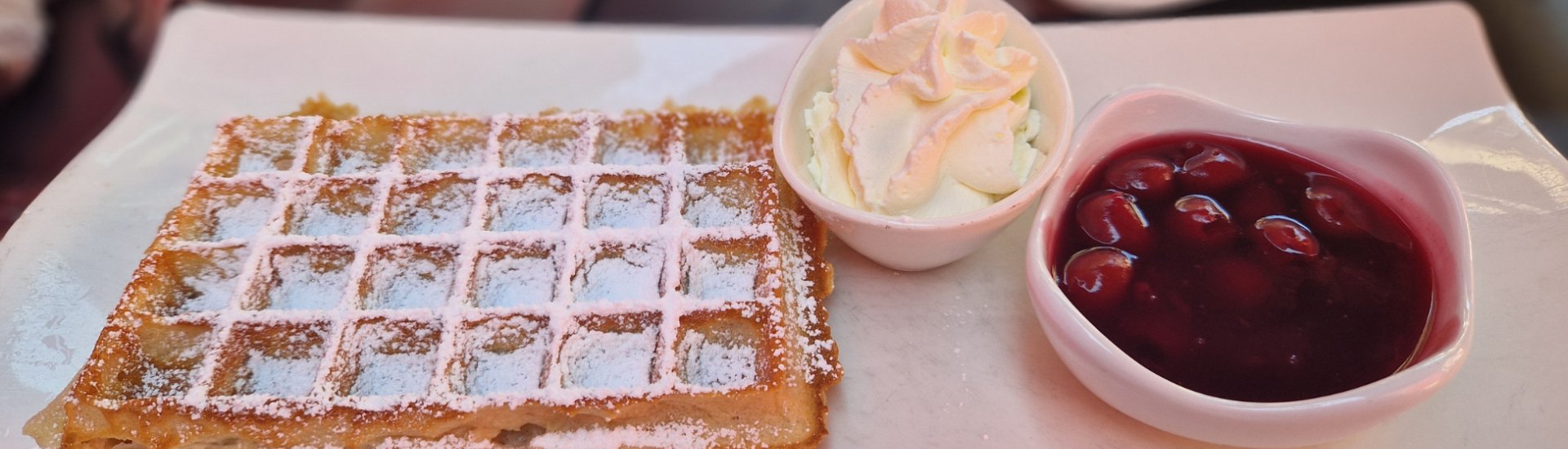
Lunch was waffles, because we had to fit them in somewhere, followed by a quick rest back at the hotel.
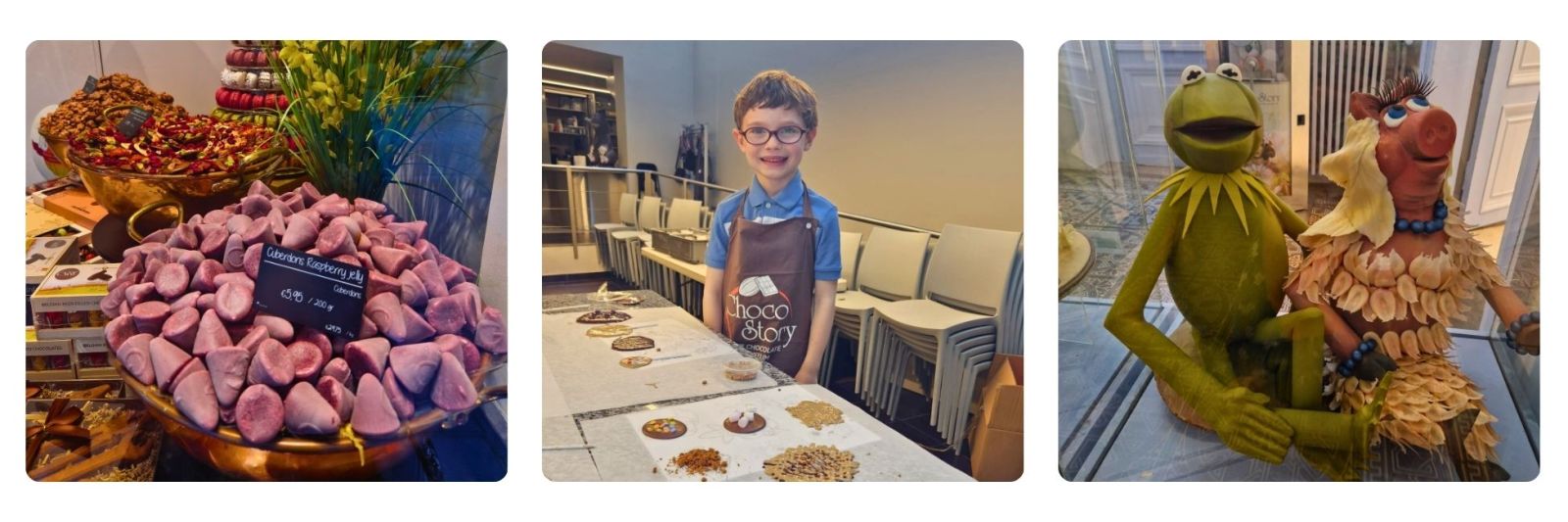
Our final tourist activity of the day was the chocolate museum and a chocolate-making workshop.
We saved the best until last. The workshop was great fun. I made a chocolate frog and S made a chocolate Gengar.
Very traditional. I’m sure the 17th-century Belgians would have been proud.
Alas, that brought us to the end of the day. There wasn’t even time to visit the Frietmuseum, an entire museum dedicated to french fries.
Maybe next time, Bruges!