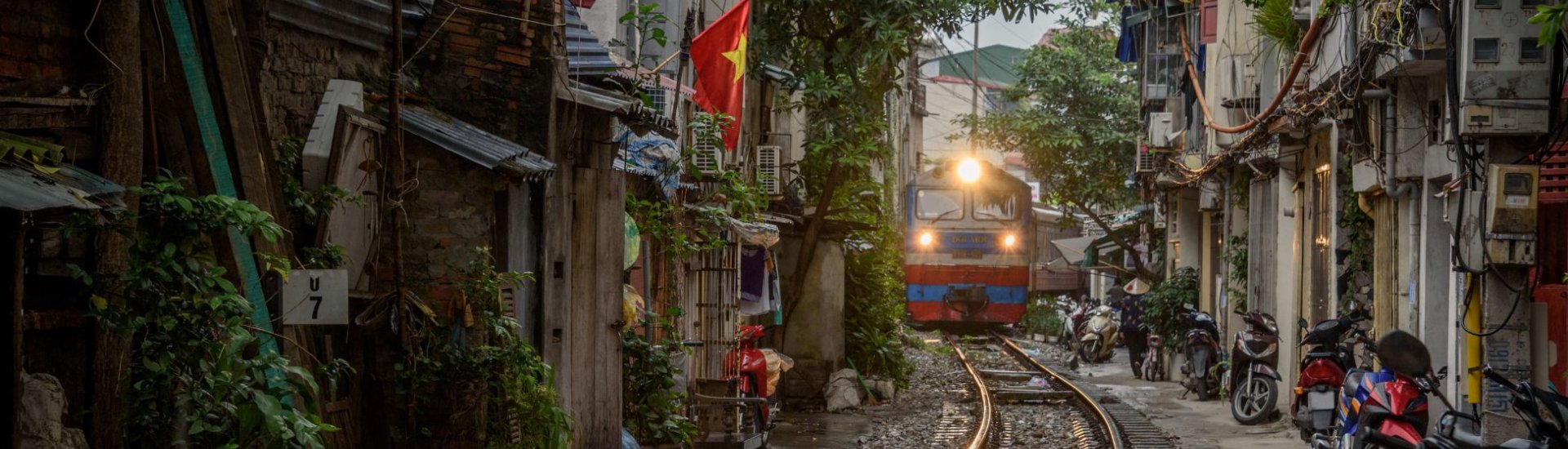
Is Two Weeks Enough for Vietnam?
Yes. Two weeks is enough for a really good first trip to Vietnam, but the key is not trying to see everything. Here’s how to plan a 14-day Vietnam itinerary, how many places to include and whether to travel north to south or south to north.
Vietnam is a long, incredibly varied country, which is both its appeal and one of the biggest challenges when planning a first trip.
There is Hanoi in the north, Ha Long Bay and its limestone islands, the imperial history of Hue, Hoi An’s old town and beaches, the energy of Ho Chi Minh City and the waterways of the Mekong Delta. Then there is Ninh Binh, Sapa, the mountains of Ha Giang, Phong Nha, Phu Quoc and plenty more.
The temptation is to try to fit all of it into one holiday.
For a two-week trip, don’t.
Vietnam works much better when you accept that you probably won’t see everything and choose a route that gives you time to enjoy the places you do visit.
On our own trip through Vietnam, we travelled from Hanoi to Ha Long Bay, then on to Hue and Hoi An before continuing south to Ho Chi Minh City and the Mekong Delta.
What stood out was the contrast. Each part felt completely different from the one before it. Hanoi had that atmospheric, chaotic energy; Hue gave us the history; Hoi An slowed everything down; Ho Chi Minh City felt busy, lively and modern; and the Mekong was different again.
The history was a huge part of the appeal, particularly for a history buff like me, but so was the culture, the food and simply watching everyday life change as we travelled through the country. We also stayed at a lovely beach retreat just outside Hoi An, which gave us some proper downtime in the middle of the trip rather than sightseeing every day.
That balance is something worth keeping when planning a Vietnam itinerary now.
Is 14 Days Really Enough for Vietnam?
Yes, particularly for a first visit.
Two weeks gives you enough time to experience northern, central and southern Vietnam if you are comfortable taking a couple of internal flights. It also gives you enough time to combine cities with history, countryside or coast.
What it does not give you is enough time to see every major destination.
A 14-day trip becomes much less enjoyable when six or seven places are squeezed in simply because they appear on a list of Vietnam’s “must-sees”.
Every move takes time. Checking out, travelling to an airport or station, making the journey, transferring to another hotel and checking in again can easily eat into a large part of a day.
For most first-time visitors, around four or five main stops is plenty.

What Is the Best Itinerary for Two Weeks in Vietnam?
There isn’t one route that suits everybody, but for a first visit a classic north-to-south journey works extremely well.
A good starting point would be:
Hanoi → Ha Long Bay or Lan Ha Bay → Hue → Hoi An → Ho Chi Minh City
If the Mekong Delta particularly interests you, add it from Ho Chi Minh City. If you prefer countryside to cities, Ninh Binh could be included in the north.
The trick is deciding which additions matter enough to justify another change of hotel.
Hanoi: 2–3 nights
Hanoi deserves more than a quick overnight stop.
The Old Quarter can feel chaotic when you first arrive, but that is part of its appeal. There are markets, temples, cafés, tiny restaurants and seemingly endless streams of scooters, alongside lakes, colonial architecture and some of Vietnam’s most important historic sites.
Two full days works well for most first-time visitors.
This is also a good place for a guided food tour. Vietnam’s food varies considerably from north to south, so starting with some context in Hanoi makes sense.
Ha Long Bay or Lan Ha Bay: 1–2 nights
From Hanoi, continue to the coast for a cruise through the limestone islands.
For many visitors this is one of the images they most associate with Vietnam, and an overnight cruise is far more rewarding than trying to squeeze the bay into a rushed day trip.
It is worth being selective about the boat. The route, cabin, food and overall standard can make a considerable difference.
Lan Ha Bay is also worth considering alongside the better-known Ha Long Bay, particularly if you are looking for a slightly different, quieter cruise experience.
Hue: 1–2 nights
Hue is sometimes dropped from first-time itineraries in favour of spending longer in Hoi An.
For anyone interested in history, that would be a shame.
Vietnam’s former imperial capital has the Citadel, royal tombs, pagodas and the Perfume River, as well as a distinctive food culture of its own. We joined a tour focused on the Vietnam War and visited some of the areas that had been heavily bombed. For us, that made Hue about much more than just the imperial sites (we did those too!) and added real context to the rest of the journey.
It is also a very different experience from both Hanoi and Hoi An, which is precisely why it earns its place in a two-week itinerary.
Hoi An: 3–4 nights
Hoi An is somewhere to give yourself a little more time.
The old town gets most of the attention, with its historic merchant houses, temples, lanterns and riverfront, but there is much more beyond the centre. Rice fields and countryside surround the town and the coast is close by.
We stayed at a beach retreat just outside Hoi An and loved having that contrast. We could explore the town and surrounding area but also have time when we weren’t doing very much at all.
That is often missing from ambitious Vietnam itineraries.
Three or four nights here doesn’t mean three or four days of organised sightseeing. It means you have room for a cooking class or cycle ride, a day exploring independently and perhaps an afternoon when the most pressing decision is where to have dinner.
Ho Chi Minh City: 2–3 nights
Ho Chi Minh City gives you another completely different version of Vietnam.
It is larger, faster and more modern than Hanoi, while also being one of the most important places for understanding the country’s recent history.
We found it a lively contrast after Hoi An. It had a completely different pace and energy, and it worked very well before slowing things down again in the Mekong Delta.
We also visited the Cu Chi Tunnels from Ho Chi Minh City. For anyone interested in modern history, it is worth allowing time for this, although be warned, it can be very claustrophobic!
Allow at least a couple of nights if you want to explore the city properly rather than simply use it as a gateway to the south.
From here, you can also travel into the Mekong Delta.
Mekong Delta: day trip or overnight
The Mekong Delta is possible as a day trip, but an overnight stay can give you a better sense of the region.
The waterways, agriculture, villages and river life are a very different final chapter to a trip that began in Hanoi.
If something has to give in a two-week itinerary, though, this is where personal priorities matter. Someone who loves cities may prefer another night in Ho Chi Minh City. Someone looking for rural Vietnam may happily trade city time for the Delta.

Should You Travel North to South or South to North?
Both work.
For many first-time visitors, north to south feels particularly natural.
Starting in Hanoi gives you an atmospheric introduction to Vietnam before moving through the country towards its warmer, more energetic south. It also creates a nice progression through very different landscapes and periods of Vietnamese history.
But there is no rule saying north to south is “correct”.
The decision should really come down to three things:
Flights. If one direction gives you significantly better international flight options, that matters.
Weather. Vietnam stretches a long way from north to south and the weather is not the same across the country. The best route can depend on the month you are travelling.
Your priorities. If you want to finish on a beach, for example, that may determine the direction of the whole itinerary.
So rather than choosing the direction first and forcing everything else around it, look at your dates, flights and most important stops together.
How Many Places Should You Visit in Two Weeks?
Around four or five main bases is usually enough.
This is probably one of the easiest places to go wrong when planning Vietnam.
On paper, another destination can look simple to add. In reality, every extra stop means another hotel, another transfer and another chunk of a day spent getting there.
For example, Hanoi, Ha Long Bay, Hue, Hoi An and Ho Chi Minh City already gives you five very different experiences.
Add Ninh Binh and the Mekong Delta and suddenly a relaxed two-week holiday is becoming quite busy.
There is nothing wrong with travelling quickly if that is how you like to travel. But don’t assume that seeing seven places is automatically better than seeing five.
Our Vietnam itineraries include several different routes, from the classic highlights to slower-paced journeys and trips that go beyond the usual first-time circuit.
What Should You Leave Out of a Two-Week Vietnam Itinerary?
This is where planning becomes personal.
For a first trip, it would be unusual to include Hanoi, Ha Long Bay, Sapa, Ninh Binh, Hue, Hoi An, Ho Chi Minh City, the Mekong Delta and a separate beach destination in two weeks.
Something has to go.
If mountain trekking is a priority, Sapa or Ha Giang may be more important than Hue.
If history and culture matter more, Hue deserves its place.
If you want several genuinely relaxing days by the sea, you may be better spending longer around Hoi An or choosing a dedicated beach stay and dropping another sightseeing stop.
And if food and city life are the main attraction, extra nights in Hanoi or Ho Chi Minh City may give you more than another rushed destination.
A good tailor-made itinerary is not about fitting the maximum possible into the time available. It is about deciding what will make your trip better.
For more help deciding where to go and when to travel, our guide to tailor-made Vietnam holidays covers the main regions, timings and different ways to put a journey together.

Quick Questions About Planning Two Weeks in Vietnam
Is 10 days enough for Vietnam?
Yes, but it is better to be more selective.
Rather than trying to travel the full length of the country, concentrate on two regions. Hanoi, Ha Long Bay and Hoi An can work very well, for example.
Ten good days in three places is preferable to ten rushed days in six.
What if you have three weeks in Vietnam?
Three weeks opens up far more possibilities.
You can add northern countryside such as Ninh Binh or Sapa, spend longer in Hue and Hoi An, explore the Mekong Delta properly or include a few days at the beach without having to sacrifice the main highlights.
It is also easier to use trains and slower forms of transport rather than relying as heavily on internal flights.
Is Ha Long Bay worth including?
For a first visit, usually yes.
The limestone scenery is spectacular and it offers a complete change from Vietnam’s cities.
The quality of the cruise matters, though. This is one area where choosing purely on price can be false economy.
Is Hue worth visiting?
If history interests you, absolutely.
Hue adds something that Hoi An cannot replace. Its imperial sites and royal history give much more context to Vietnam’s past, and the city has a strong food culture of its own.
If history does not interest you and time is very tight, this may be one of the places you decide to leave out.
How long should you spend in Hoi An?
Three or four nights works very well.
That gives you time to see the old town, explore some of the surrounding countryside and still have some downtime.
It is also one of the easiest places on a classic Vietnam route to combine sightseeing with the beach.
Can you combine Vietnam and Cambodia in two weeks?
You can, but you will need to be selective.
Trying to see the full length of Vietnam and add Cambodia in 14 days would be too much for most travellers.
A better option is to concentrate on perhaps Hanoi, Hoi An and Ho Chi Minh City, then add Siem Reap and Angkor, or allow closer to 16–18 nights for the combined trip.
So, Is Two Weeks Enough for Vietnam?
Yes.
Two weeks gives you enough time for a genuinely varied first trip: bustling cities, spectacular landscapes, centuries of history, fantastic food, time on the water and perhaps a few days near the beach.
What made Vietnam memorable for us was not simply the individual sights. It was how different one part of the journey felt from the next, from Hanoi and the history of Hue to the slower pace of Hoi An, the energy of Ho Chi Minh City and the waterways of the Mekong.
That contrast is one of Vietnam’s great strengths.
The mistake is assuming that because there is so much to see, you need to see all of it on your first visit.
You don’t.
Choose the places that matter most, give them enough time and leave something for another trip.