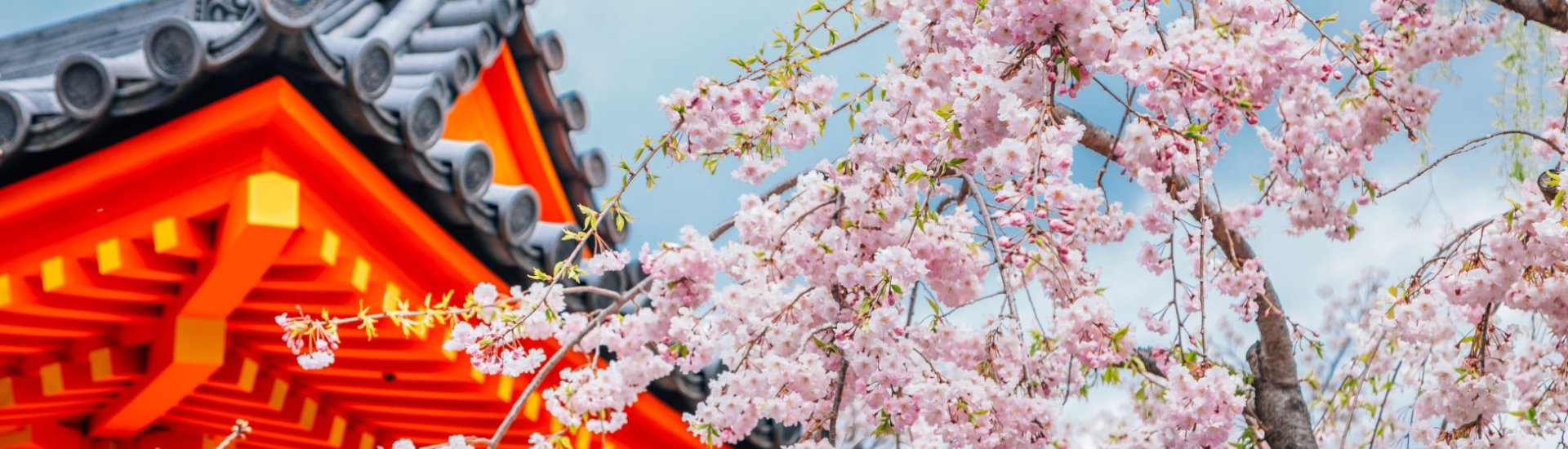
Is Kyoto Still Worth Visiting in Cherry Blossom Season?
If you’re planning Japan for cherry blossom season, Kyoto is probably already on your list.
And for good reason.
It’s one of the places people most want to see on a first trip to Japan, especially in spring, but it’s also one of the places people worry about most.
You’ve probably seen the photographs: packed streets, crowded buses, queues around the famous temples and hundreds of people trying to get exactly the same cherry blossom shot.
And yes, Kyoto can get very, very busy in late March and early April.
But I still think Kyoto is absolutely worth including.
You just need to plan it a little differently.
How crowded is Kyoto during cherry blossom season?
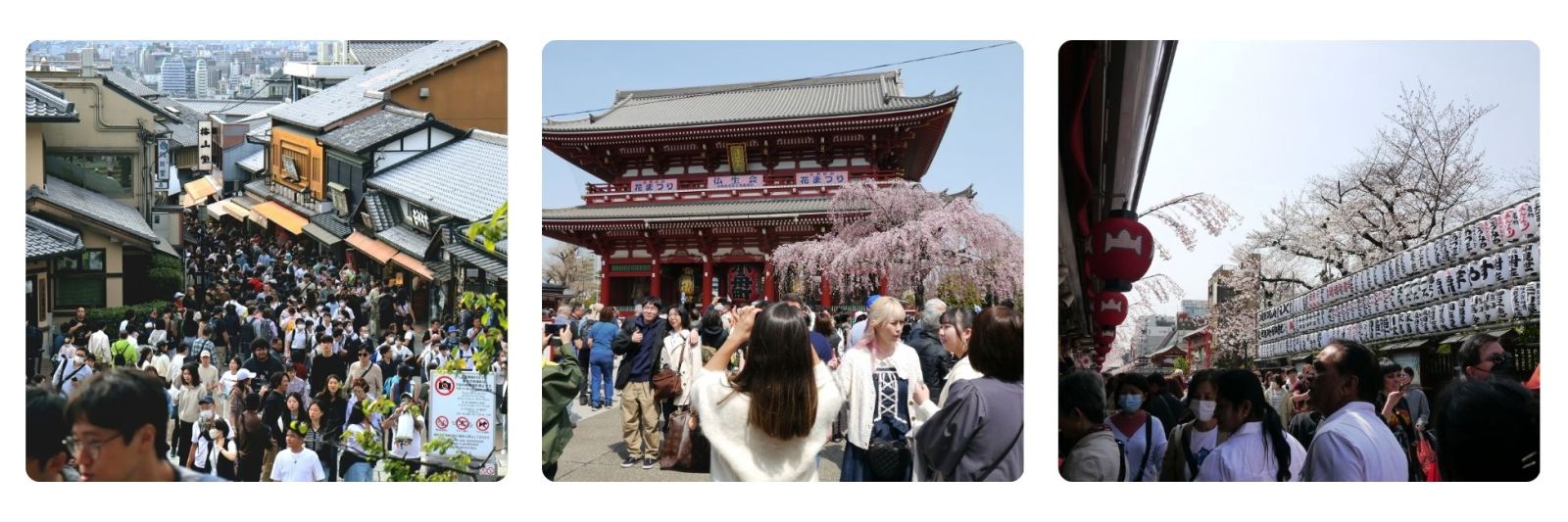
Very.
There’s no point pretending otherwise.
The busiest parts of Kyoto can feel extremely crowded during blossom season, especially around places such as Kiyomizu-dera (the hilltop temple), Arashiyama (bamboo forest), Gion and the Philosopher’s Path.
But Kyoto has thousands of temples and shrines, and visitors tend to concentrate around a relatively small number of headline sights.
Change the time you visit, walk another ten minutes, plan by neighbourhood rather than attraction, and the city suddenly feels very different.
Should you avoid Kyoto in cherry blossom season?
No.
I actually think some “avoid the tourist spots” advice goes too far.
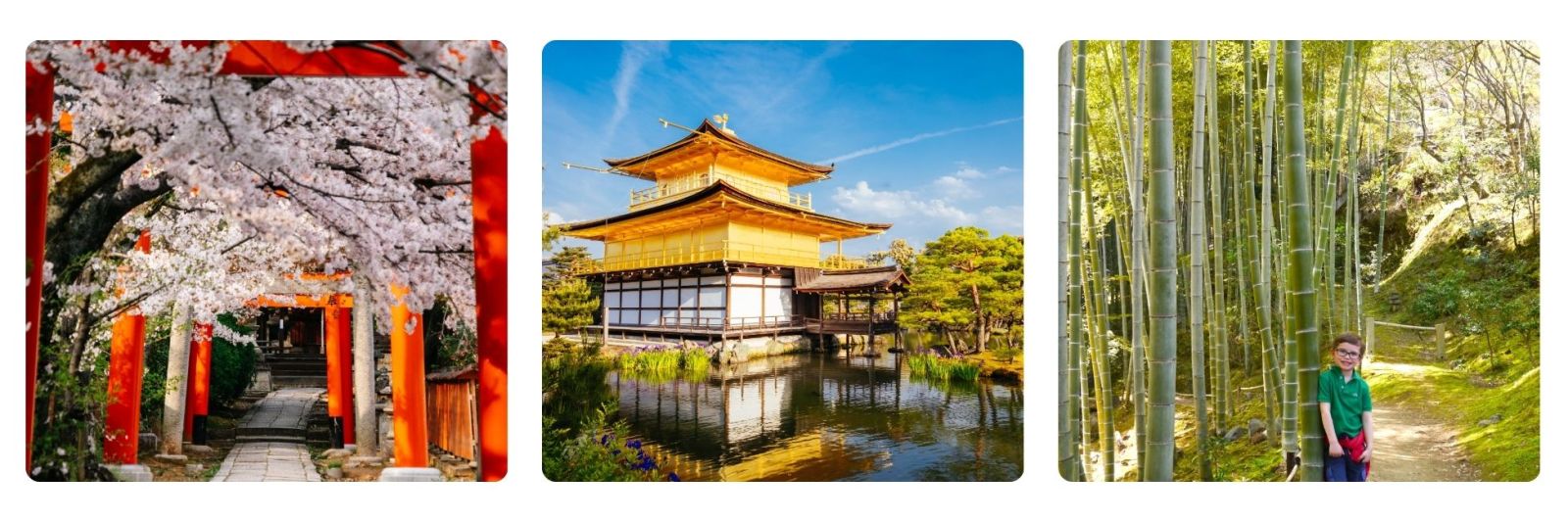
If this is your first trip to Japan and you’ve always wanted to see Fushimi Inari (with thousands of torii gates winding up Mount Inari), Kinkaku-ji (the Golden Pavilion) or the Arashiyama Bamboo Grove, go and see them.
They’re famous for a reason.
The trick is not to remove everything popular from your itinerary. It’s to be smarter about when you visit and what you do afterwards.
How to see Kyoto’s famous sights during cherry blossom season
Fushimi Inari: keep walking
The photographs you usually see are taken around the lower sections of the shrine, where the torii gates are densest.
But Fushimi Inari continues all the way up Mount Inari through wooded paths, smaller shrines and thousands more gates.
A lot of visitors simply don’t go very far.
You don’t need to hike all the way to the summit. Just keep walking beyond the most photographed sections and the experience changes surprisingly quickly.
Arashiyama: go early, then keep going
If the bamboo grove is important to you, go early.
But don’t take the photograph and leave.
Continue into northern Arashiyama and you’ll find smaller temples and gardens such as Gio-ji and Adashino Nenbutsu-ji.
One of the best rules in Kyoto is: let the famous sight be the beginning of the day, not the whole day.
Don’t turn cherry blossom into a treasure hunt
This is one of the biggest things I’d change if you’re visiting Kyoto in spring.
Cherry blossom isn’t a Kyoto attraction. It’s a Japanese spring.
If you’re travelling around Japan during blossom season, you’re likely to see cherry trees beside rivers, stations, castles, parks and neighbourhood streets.
Some of the loveliest blossom moments will be the ones you didn’t plan.
So I wouldn’t spend your Kyoto days racing from one famous blossom spot to another.
If you do want a dedicated blossom day, look at places with room to wander such as Kyoto Botanical Gardens, the Kamo River, Yoshida-yama and Shinnyo-do.
Kiyamachi can also be particularly attractive after dark when the trees beside the canal are illuminated.
Use the edges of the day
You do not need to get up at 5am every morning.
That stops being a holiday fairly quickly.
Choose one or two places where an early start really matters, perhaps Fushimi Inari or Arashiyama.
Use the busiest part of the day for lunch, shops, museums, experiences, gardens or less famous neighbourhoods.
Then go out again in the evening.
Gion, Pontocho, the Kamo River and Higashiyama all change after the day-trippers begin to disappear.
Stop crossing Kyoto
This may be the most useful piece of advice in the whole article.
Kyoto’s major sights are spread around the city.
Trying to visit Arashiyama, Kinkaku-ji, Gion and Fushimi Inari in one day can mean spending far too much time just getting from one place to another.
Think in areas, not attractions.
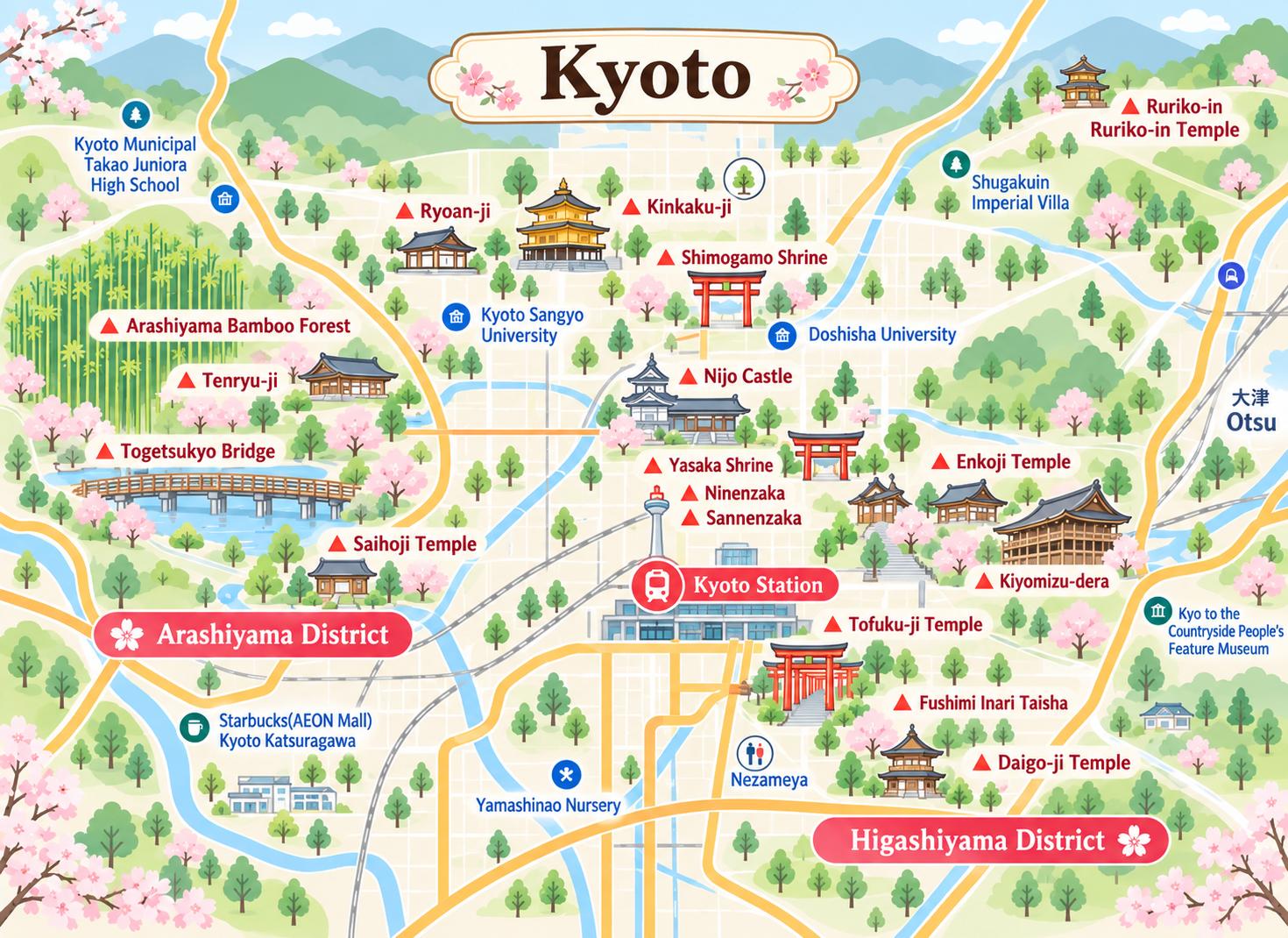
Eastern Kyoto
Kiyomizu-dera → Ninenzaka and Sannenzaka → Yasaka Shrine → Gion
Northern Higashiyama
Ginkaku-ji → Philosopher’s Path → Honen-in → Nanzen-ji
Western Kyoto
Arashiyama Bamboo Grove → Tenryu-ji → riverside → Gio-ji → northern Arashiyama
Central Kyoto
Nijo Castle → Nishiki Market → downtown → Kamo River → Pontocho
Kyoto isn’t just temples
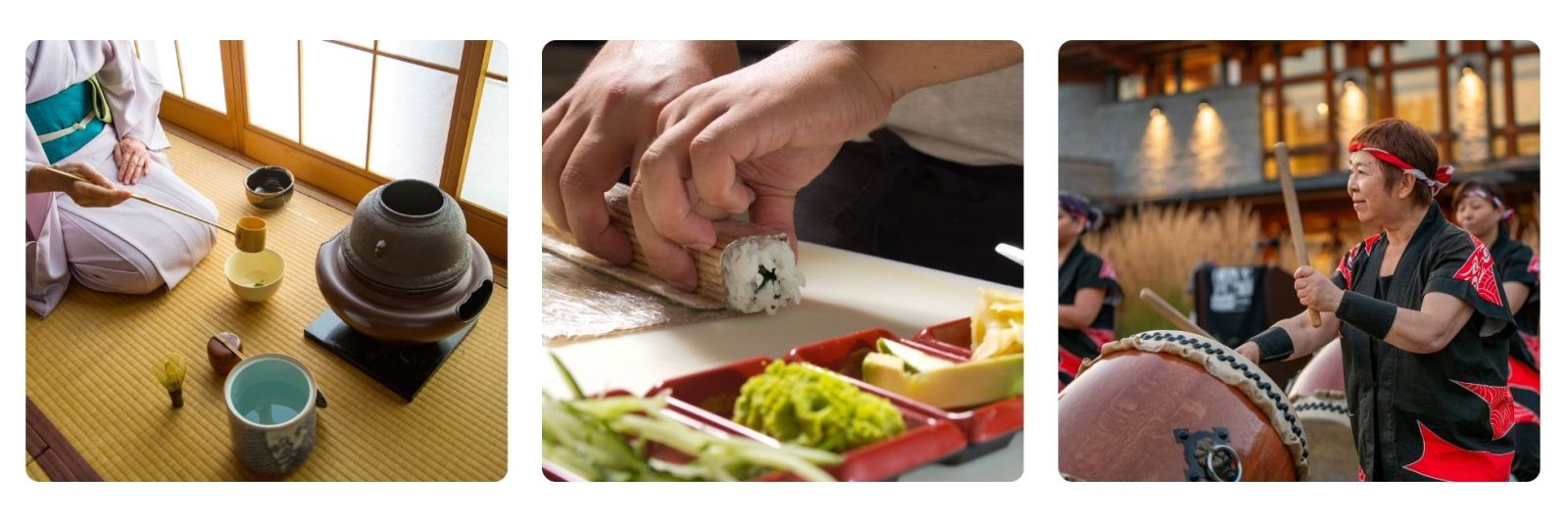
There is such a thing as temple fatigue.
Kyoto has extraordinary temples and gardens, but after several in a row, it’s remarkably easy for one beautiful garden to start merging into another.
Break them up.
A tea ceremony, cooking class, sake tasting, craft workshop, food tour or properly arranged geiko or maiko cultural experience gives the day a completely different feel.
And Kyoto isn’t frozen in the past.
Nintendo was founded there, there’s a Pokémon Center in central Kyoto and teamLab Biovortex Kyoto gives you a completely different, modern side to the city.
Where you stay in Kyoto during cherry blossom season matters
Don’t choose a hotel just because someone says it’s “central”.
Central to what?
Downtown Kyoto works well if restaurants, shopping and transport matter.
Southern Higashiyama and Gion put you closer to the historic streets many people imagine before they arrive.
Kyoto Station can be extremely practical if you’re arriving and leaving by Shinkansen or taking day trips.
The useful question isn’t:
“Where is the best place to stay in Kyoto?”
It’s:
“Where is the best place to stay for what we actually want to do?”
How I would spend three days in Kyoto during cherry blossom season
Day 1: Eastern Kyoto
Go to Kiyomizu-dera before the busiest part of the day.
Walk through Ninenzaka and Sannenzaka and explore Higashiyama.
Slow down in the middle of the day with lunch, shops, a tea ceremony or another experience.
Later, head towards Yasaka Shrine and Gion, then finish with dinner around Gion or Pontocho and a walk beside the Kamo River.
Day 2: Arashiyama and beyond
Visit the bamboo grove early.
Continue to Tenryu-ji and then keep going into northern Arashiyama rather than heading straight back into the city.
Explore Gio-ji and give yourself time for lunch.
Return to central Kyoto later in the day.
Day 3: choose your Kyoto
This is where I’d personalise it.
- Culture: Start with Nijo Castle and choose either north-west Kyoto or Northern Higashiyama.
- Travelling with teenagers: Consider Nintendo, Pokémon or teamLab.
- Food: Build the day around a market, cooking experience, sake tasting or food tour.
- Cherry blossom: Follow where the blossom is looking particularly good rather than slavishly following a fixed checklist.
- Need a change of scenery: Consider a day in Nara, Uji or visit Himeji Castle.
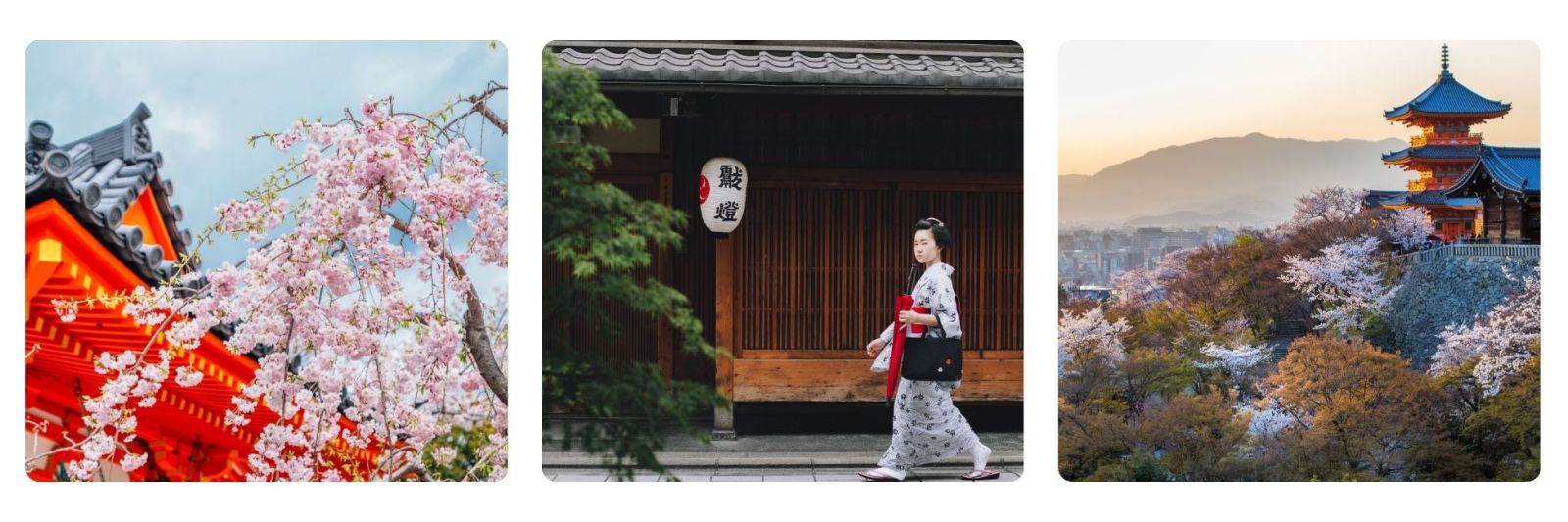
So, is Kyoto worth visiting in cherry blossom season?
Yes. Absolutely.
It will be busy.
You probably won’t get every photograph without another person in it, and it really doesn’t matter.
Kyoto was Japan’s imperial capital for more than a thousand years, but it isn’t a city preserved in the past. Temples and gardens sit alongside food, craftsmanship, neighbourhood life and contemporary Japan.
You don’t need to see everything.
And you don’t need to spend the whole trip trying to escape every other visitor.
The difference between an exhausting Kyoto visit and a brilliant one is how you plan it.
Planning Japan for cherry blossom season?
If you’d like help working out how many nights to spend in Kyoto, where to stay, what is worth booking and how Kyoto should fit into the rest of your Japan route, Rockhopper Holidays can help bring the trip together.
Enquire about your Japan holiday
Quick questions about Kyoto in cherry blossom season
When is cherry blossom season in Kyoto?
Late March into early April is typically the main period, although the exact timing varies each year and different varieties of cherry tree flower at different times.
Is Kyoto crowded during cherry blossom season?
Yes. It is one of Kyoto’s busiest times of year, particularly around the major sightseeing areas. That doesn’t mean you should avoid the city, but timing and route planning matter much more.
Should I skip Kyoto because of the crowds?
No. Planning by neighbourhood, changing the timing of famous sights and mixing headline attractions with less concentrated areas can make a significant difference.
How many days should I spend in Kyoto?
For many first-time visitors, three days gives you enough time for the major areas, some less obvious places and at least one experience without trying to rush across the city.
What is the best way to avoid crowds in Kyoto during cherry blossom season?
Visit the most popular sights earlier or later in the day, plan by area rather than attraction, keep walking beyond the obvious photo stops and don’t make every cherry blossom stop a famous one.
More Japan planning advice
If you're planning a trip to Japan, you may also find these useful:
You can also explore our Japan holidays page for more ideas and planning advice.